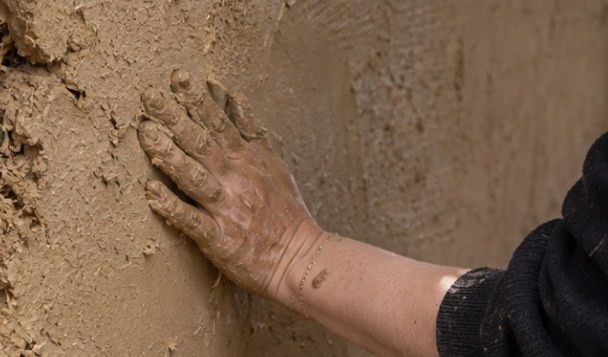
Earth
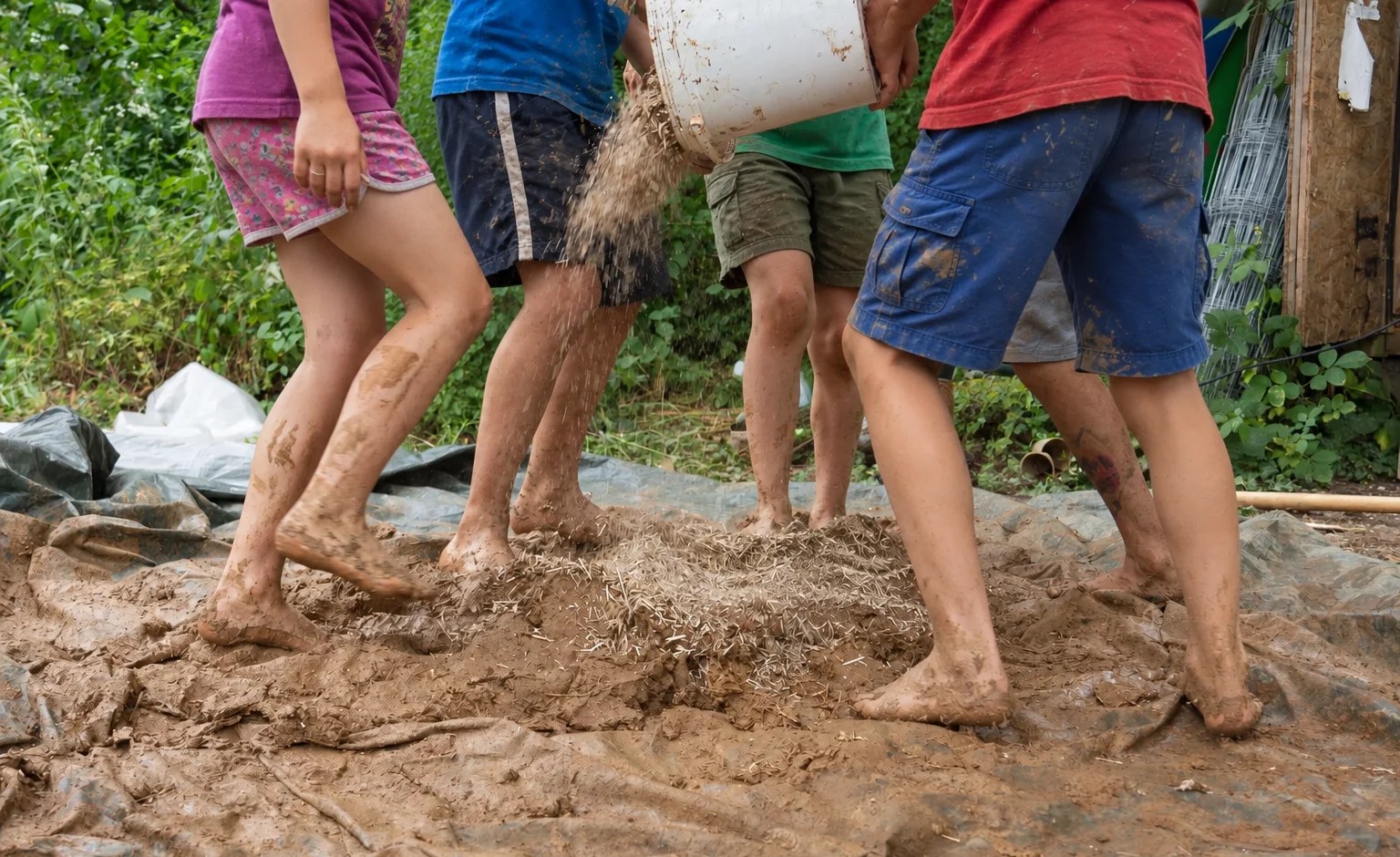
Excavated earth from the region. The binders we choose decide whether it can return to the ground at the end.
Zurich Binz / Alt-Wiedikon
A small walk-in pavilion, a house in miniature. Children, young people and families build it layer by layer alongside specialists - and discover with all their senses where building material comes from and where it returns.
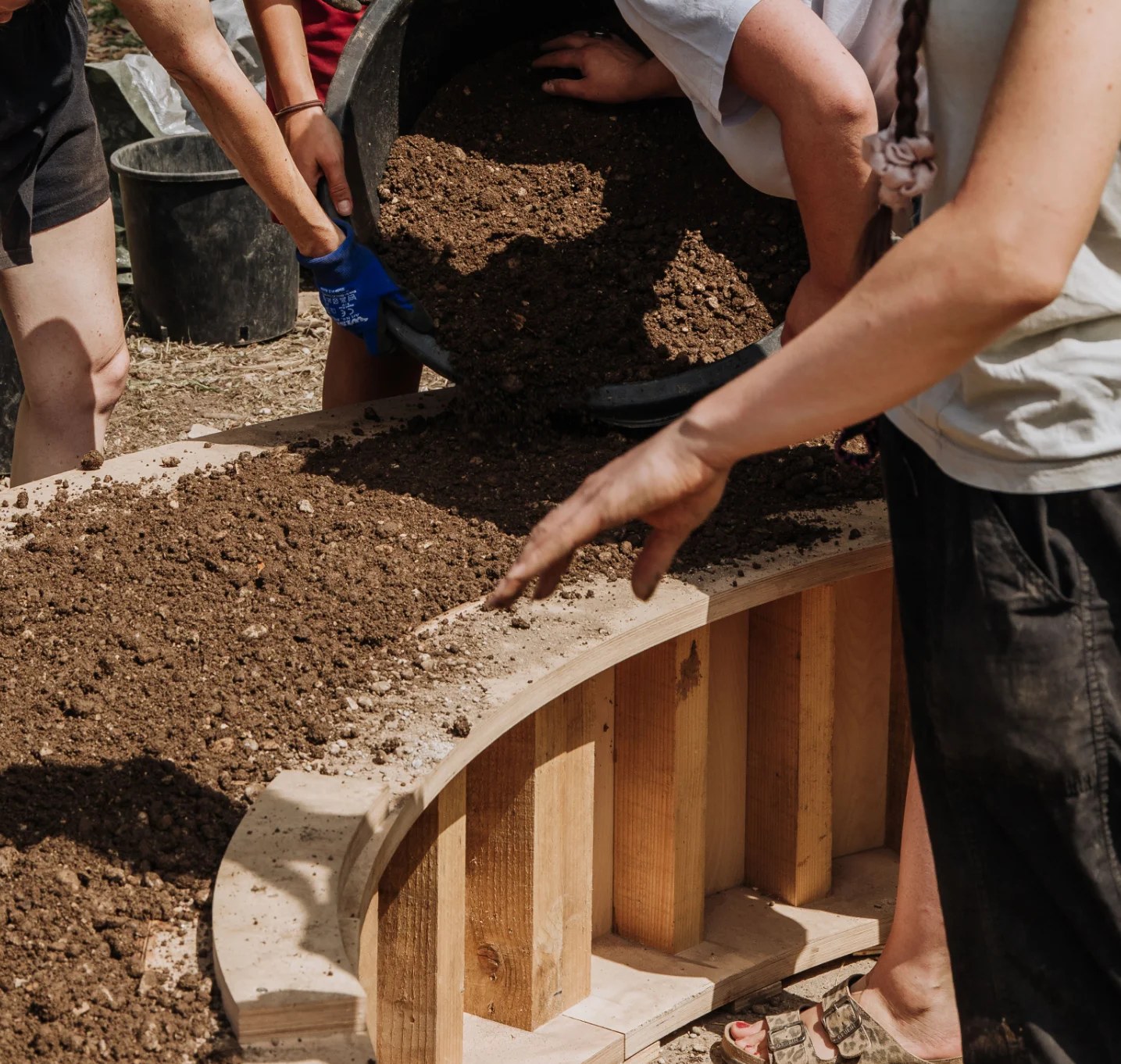
In building, earth and straw are often called «primitive», although many regions built with them for centuries. What has often been lost is less the technical knowledge than the continuity: local supply chains and the craft knowledge that was embedded in them.
A playground cannot rebuild those. But it can be a place to experience the materials and meet the people that work with them - a basis for breaking down reservations among adults and in the construction industry too.
Instead of complex calculations, children and families experience first-hand what insulation, passive energy use, circular thinking and resource conservation actually mean. The claim stays deliberately modest: the house shows principles at human scale.
25 %
of the City of Zurich's total greenhouse gas emissions come from buildings: heat supply, construction activity and electricity supply.
City of Zurich, Klimaschutzplan 2025 (base year 2022)
37 %
of annual global energy and process-related CO2 emissions come from the construction sector.
UNEP, Global Status Report for Buildings and Construction 2024 (2022 data)
13
months from material research to open documentation.
What matters is the path, not the material itself. We map what the region offers and follow each material back: who grows or extracts it, how it is processed, what is added to it, and where it can go at the end. Earth, straw, hemp and timber are candidates we expect. The mapping will confirm or reject them.
Excavated earth from the region. The binders we choose decide whether it can return to the ground at the end.
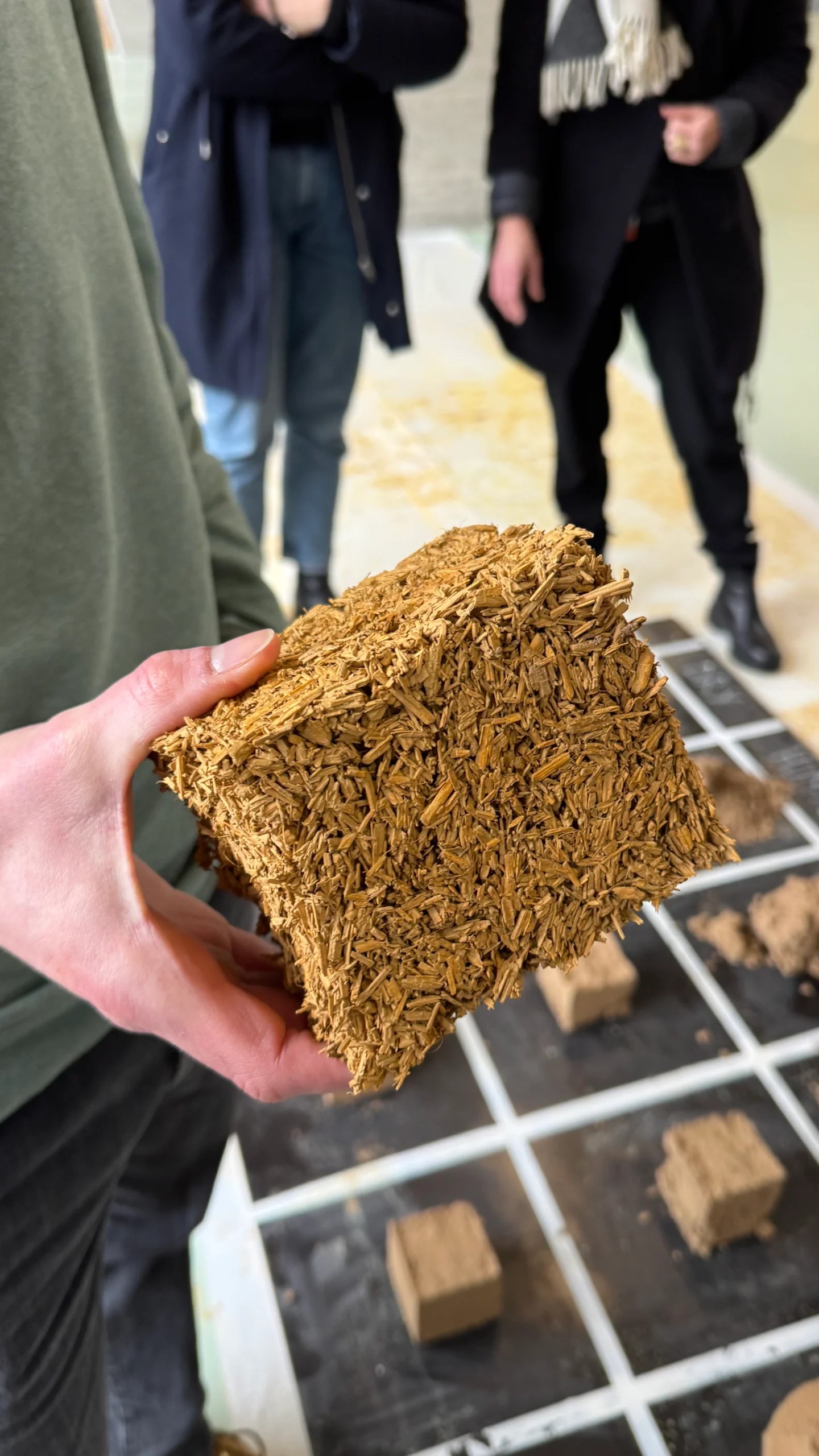
Straw and hemp shives, co-products of regional farming, if the regions offers them. As bales, fills or lightweight mixes the insulate. Co-products come before anything newly grown or extracted.
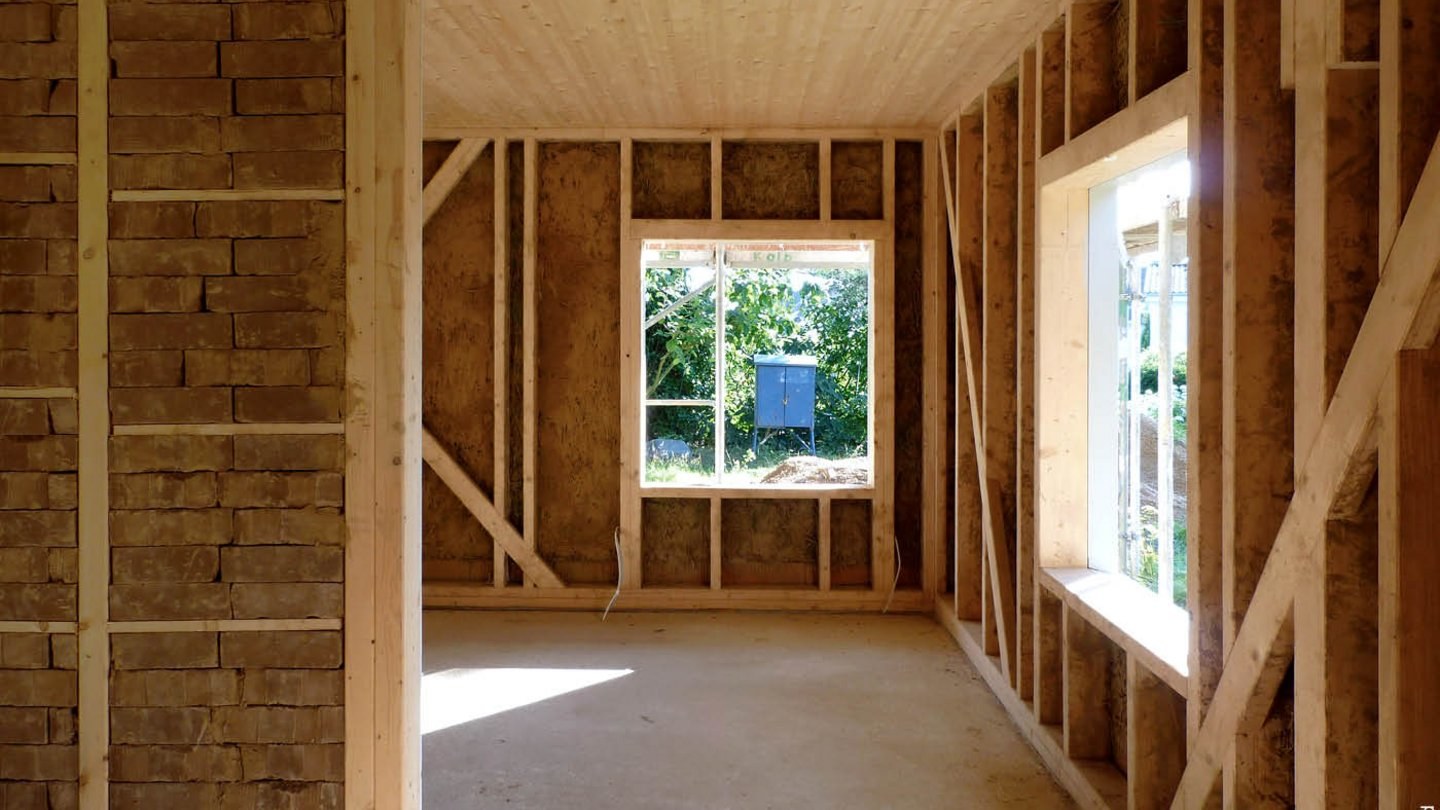
Wood, as regional as the mapping allows. We prioritize short lengths and small sections that children can carry and place themselves. The structure stays with the specialists.
Planned over 13 months from December 2026. The start date depends on clarifying the site and the funding.
Open workshops for families and school classes. No experience needed
- tools, material and guidance provided on site.
The structure may be ephemeral — what remains is the method. Mix ratios, test results, sources and supplier contacts, as well as the build sequence are published openly, so that other neighbourhoods, schools and playgrounds can adapt them to their own educational programmes.
Map, matrix and criteria sheet of the material paths in the region.
From February 2027Programme, materials and build sequence to adapt to your own place.
From September 2027